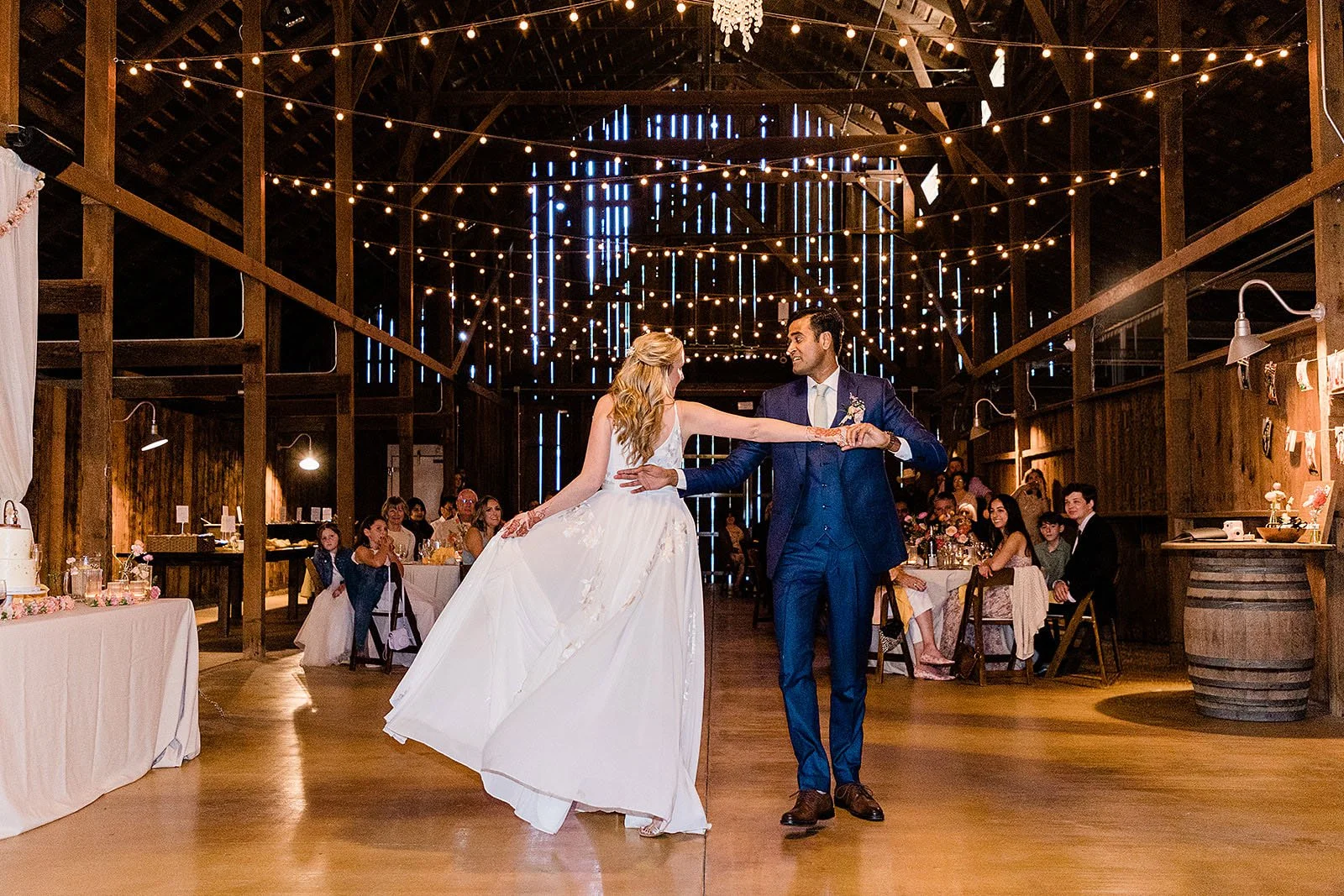
There’s a moment at almost every wedding we photograph where the light disappears fast. The ceremony glow fades, dinner wraps, and suddenly we’re on a dance floor lit by whatever the DJ brought and maybe a few strings of bistro lights. It’s a common question: how do we actually get good photos once the sun is down and everyone's dancing?
Reception lighting is definitely one of the trickiest parts of the wedding day to photograph and it’s worth understanding before your big day, not after.
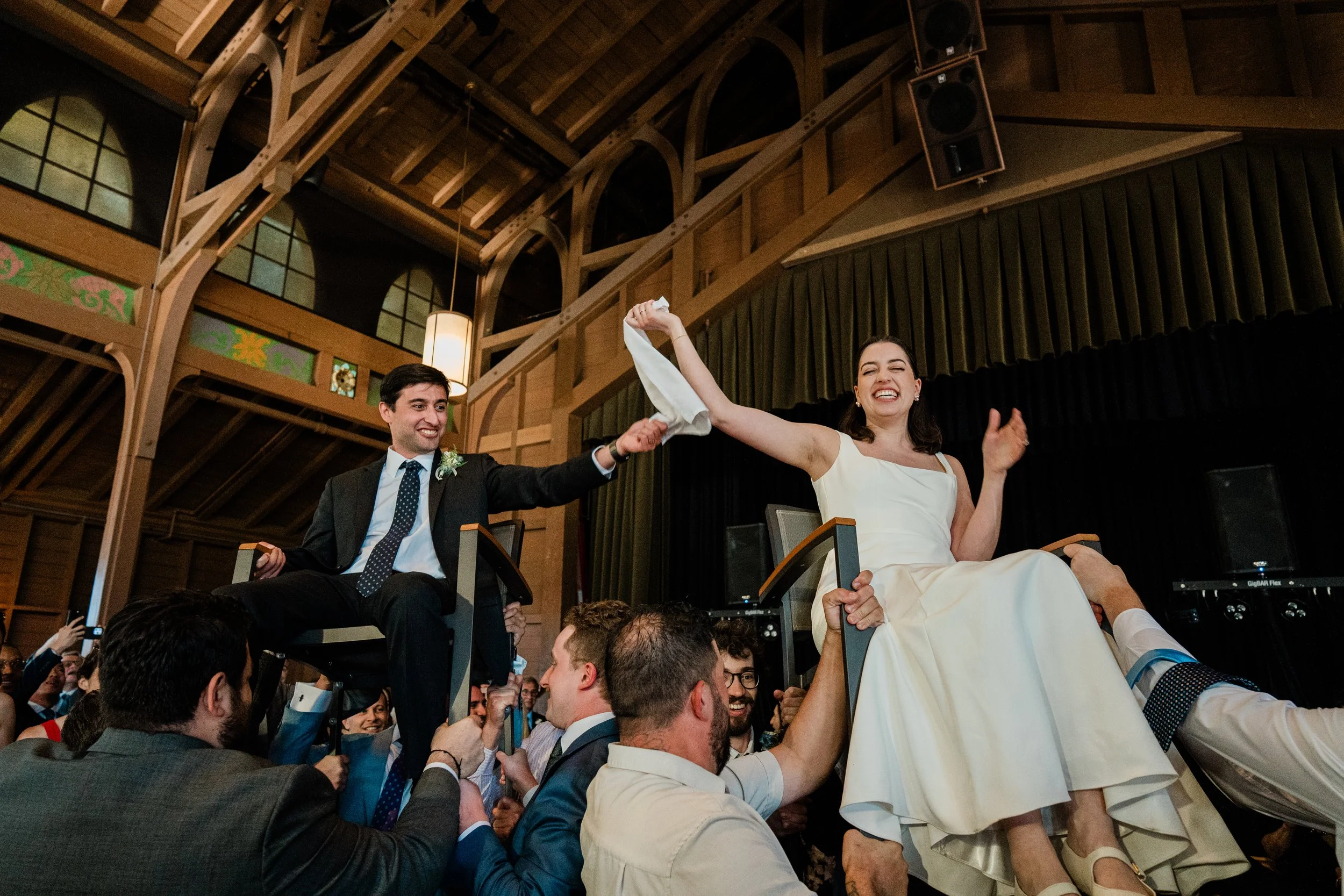
Most venues aren’t lit for photography, they’re lit for atmosphere, so the light tends to be low and uneven. On the dance floor, add in mixed color temperatures and constant motion, and you’ve got a scene that’s nothing like a posed portrait. Get it wrong and you might end up with blown out faces, muddy backgrounds, and blurry subjects.
We bring the same approach to the dance floor that we use earlier in the day: add light as needed. The goal is to keep the mood of your lighting rather than wash it out. In practice, that means being prepared for and knowing how to handle many scenarios. Sometimes there’s enough ambient light that flash isn’t necessary, but most of the time we’re balancing on-camera and off-camera flash. We try to keep the footprint small, so the dance floor stays clear for your guests.
Timing matters too. Some of the best dance floor photos happen in short bursts, not through nonstop coverage.
The goal is always the same: to capture the real emotion of the room, as it looked and felt!